In this section
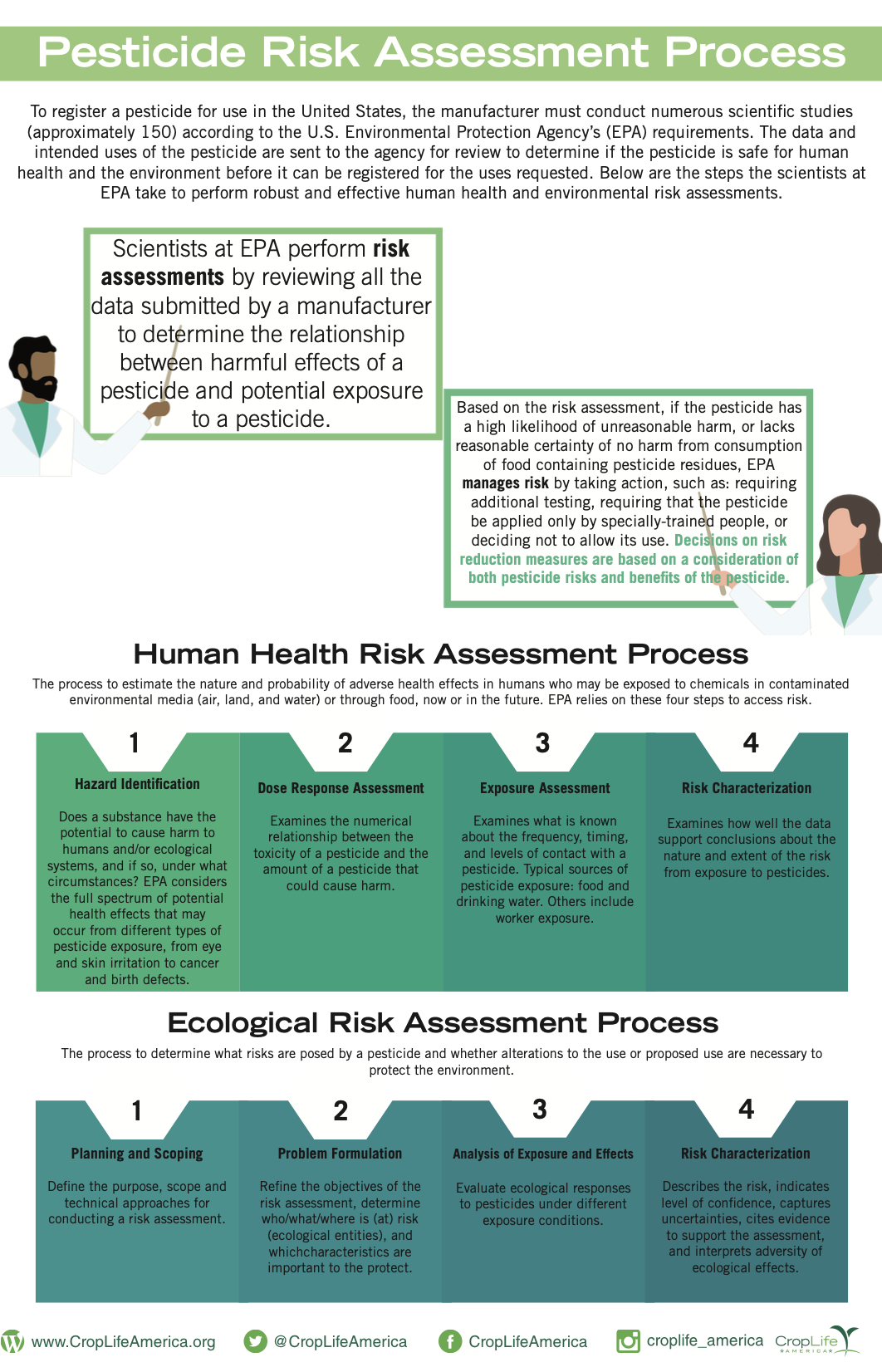
Environmental and Ecological Risk Assessment
| Environmental Risk Assessment (or EnvRA) evaluates potential effects to terrestrial and aquatic wildlife, plants, and other organisms as result of exposure of to a chemical, physical, or biological agent. | ![]() |
Background
Agents which could be present in the environment include crop protection products as a result of their government-approved, intended use. Manufacturers are required to register these products with EPA by providing scientific studies demonstrating that the use of the product would not cause “unreasonable adverse effects on human health or the environment."
“The principles of risk assessment applied to pesticides are fundamentally the same as those applied to bridge and highway design, pharmaceuticals, and innumerable consumer products. The process is directed toward establishing an objective basis on which to assess risk potential relative to the likelihood of injury (Purdue University, 2005)."
CropLife America's Position
- A level of acceptable risk is necessary in order to offset competing risks and attain societal benefits ~ a “zero” risk level is impossible to achieve.
- Accepting some minimal level of risk to ecological organisms may be necessary. For instance, when spraying insecticides to reduce mosquito populations and reduce the risk to human health of contracting diseases these insects carry, such as malaria or West Nile Virus.